


Leeward Financial Partners
Most U.S. equity markets continued to advance during the third quarter (see Figure 1 below), supported by resilient economic growth and strong corporate earnings despite renewed inflation concerns and rising interest rates. Thus far, corporate fundamentals have prevailed, allowing markets to move higher even as the Federal Reserve begins a new cycle of interest rate increases.
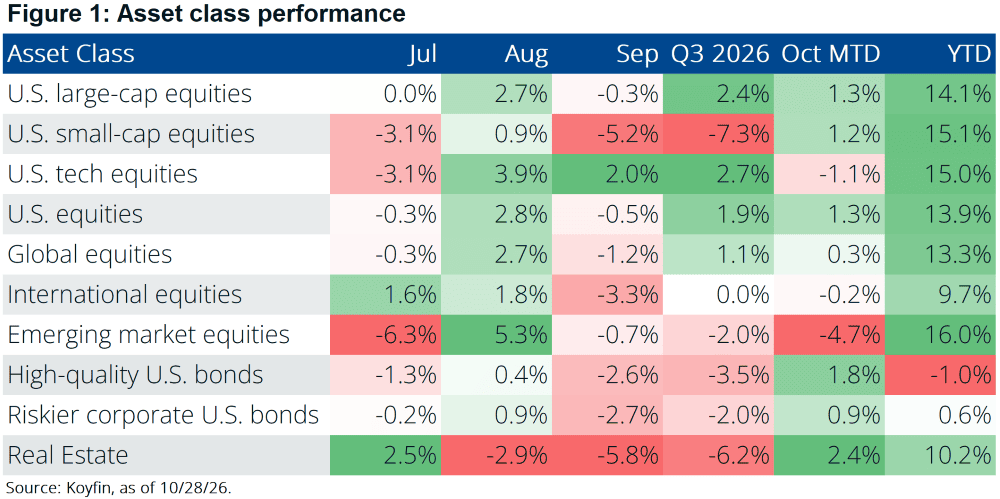
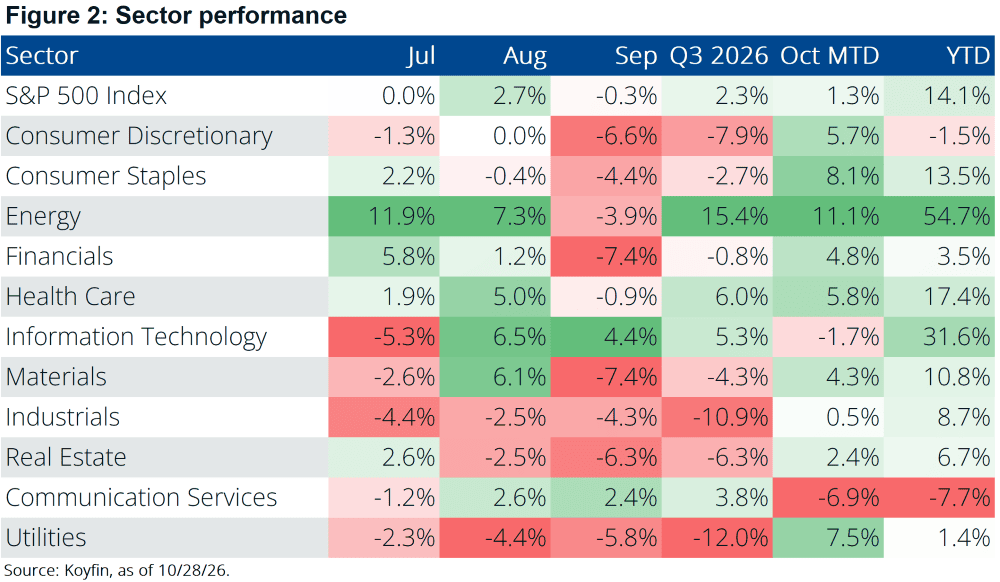
Market leadership, however, has become increasingly concentrated. Following broader participation earlier in the year, large-cap technology companies have reasserted their dominance. Technology was the only sector to generate positive returns in September (see Figure 2 below), while healthcare demonstrated improving relative strength and financial companies faced pressure from rising rates. The divergence between market capitalization-weighted and equal-weighted indices illustrates this narrowing participation, a trend that may persist until monetary policy becomes more predictable.
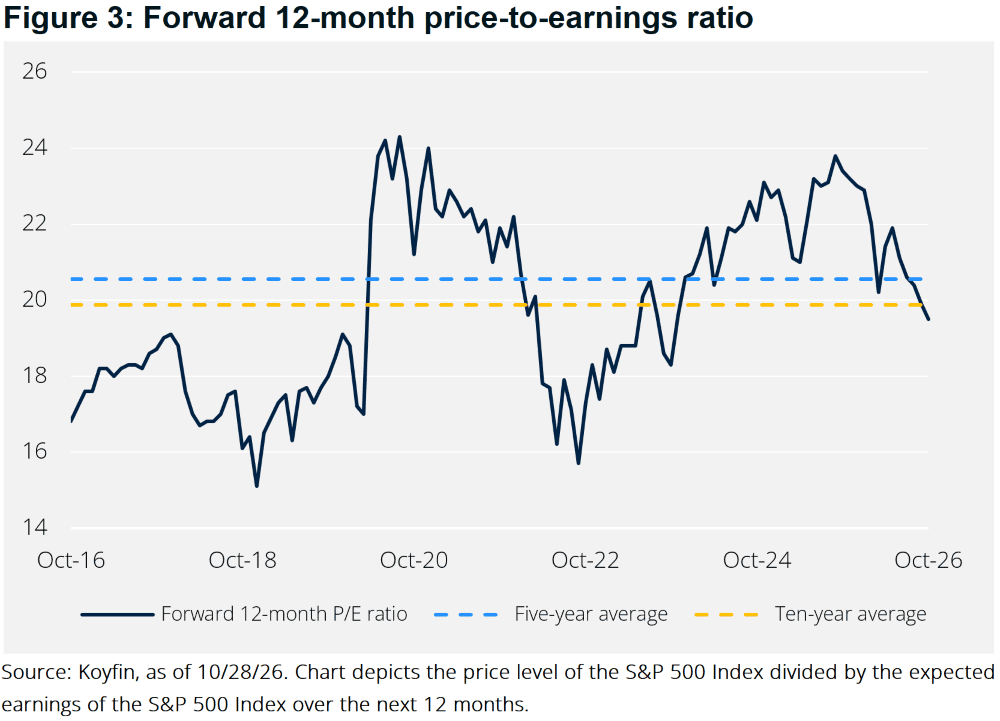
Despite these challenges, equity valuations have become more reasonable. With the S&P 500 trading near 19 times forward earnings, valuations are roughly in line with their ten-year average and considerably below recent peaks (see Figure 3 below). Strong earnings growth has supported equities even as valuation multiples have contracted, suggesting that corporate profitability, rather than further multiple expansion, will be increasingly important in driving returns.
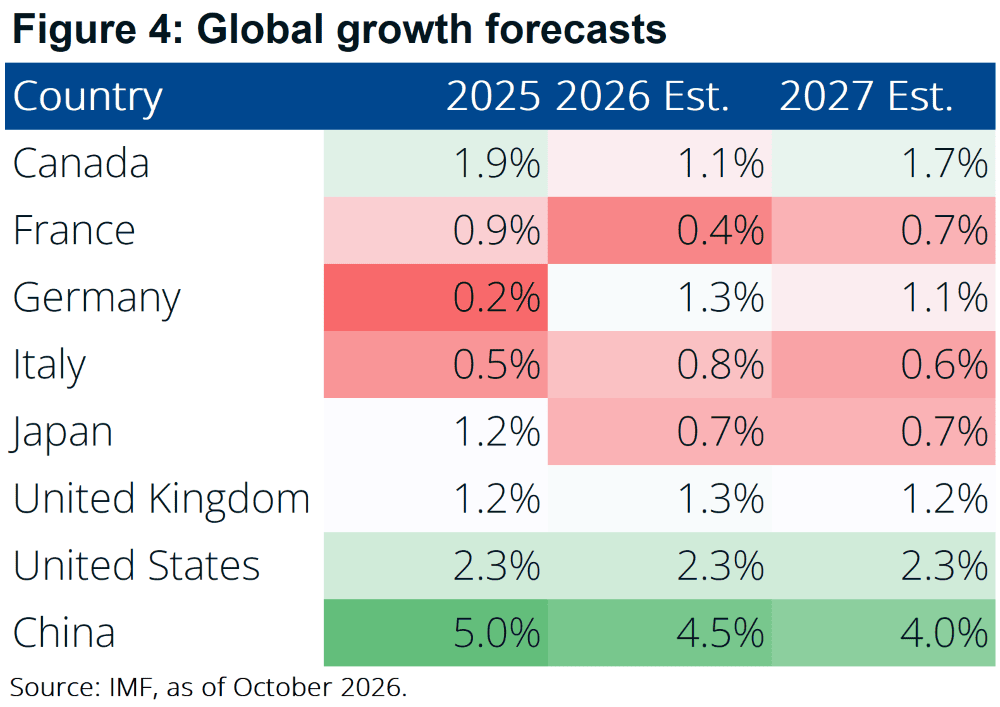
International equities continue to present a less compelling investment backdrop. Despite comparatively attractive valuations, weaker economic growth (see Figure 4 below) and corporate profitability have limited their appeal relative to U.S. markets. We would prefer to see more convincing improvements in earnings fundamentals before materially increasing exposure.
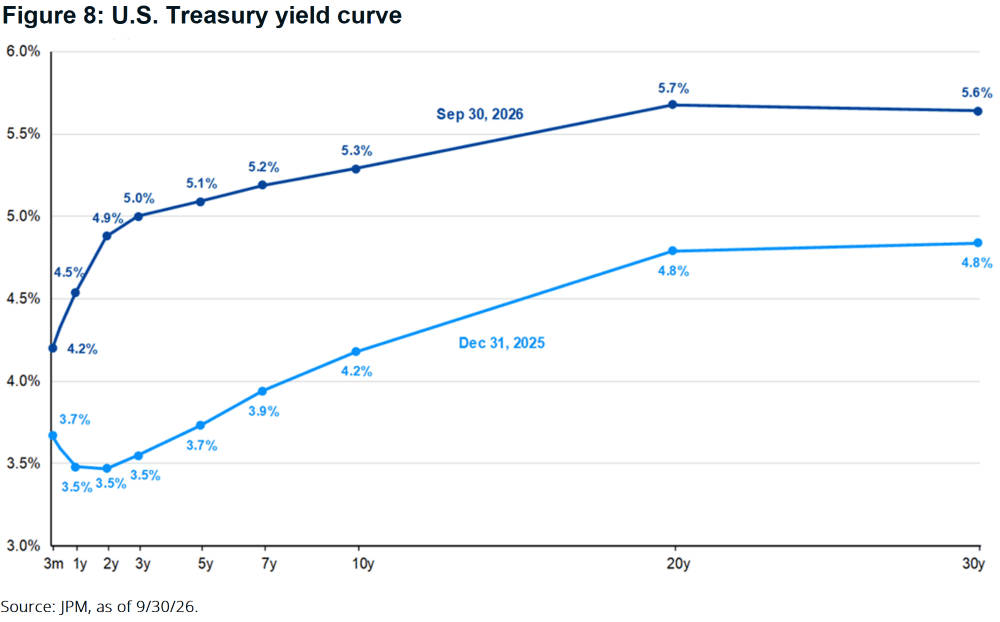
Fixed income markets faced pressure as the benchmark 10-year Treasury yield climbed to approximately 5.3% by quarter-end, reflecting persistent inflation, government borrowing, and expectations for further Fed tightening. Although higher yields have weighed on bond prices, they have also improved income opportunities. By late October, yields had retreated toward 5.0%, reinforcing our view that yields may be approaching the upper end of their range.
Commodity performance varied considerably. Oil prices surged amid geopolitical tensions, while precious metals faced pressure from higher interest rates and a stronger dollar. Industrial metals were mixed, balancing infrastructure demand against global growth concerns. Given these competing forces, we see limited value in broad-based commodity exposure.
The U.S. economy continues to demonstrate remarkable resilience, with growth consistently exceeding earlier expectations. First-quarter GDP growth was revised higher to 2.5%, while second-quarter growth was revised to 2.2%. The economy expanded another 3.4% in the third quarter (see Figure 5 below), supported by robust consumer spending, business investment, and government expenditures, partially offset by weaker net trade. Digging into the details, growth reflects several familiar trends, including investment in computers and related equipment supporting the AI buildout, alongside increased spending on healthcare services and prescription drugs, including the growing adoption of GLP-1 medications. Early estimates suggest fourth-quarter growth could approach 3%, potentially bringing full-year GDP growth to approximately 2.8%.
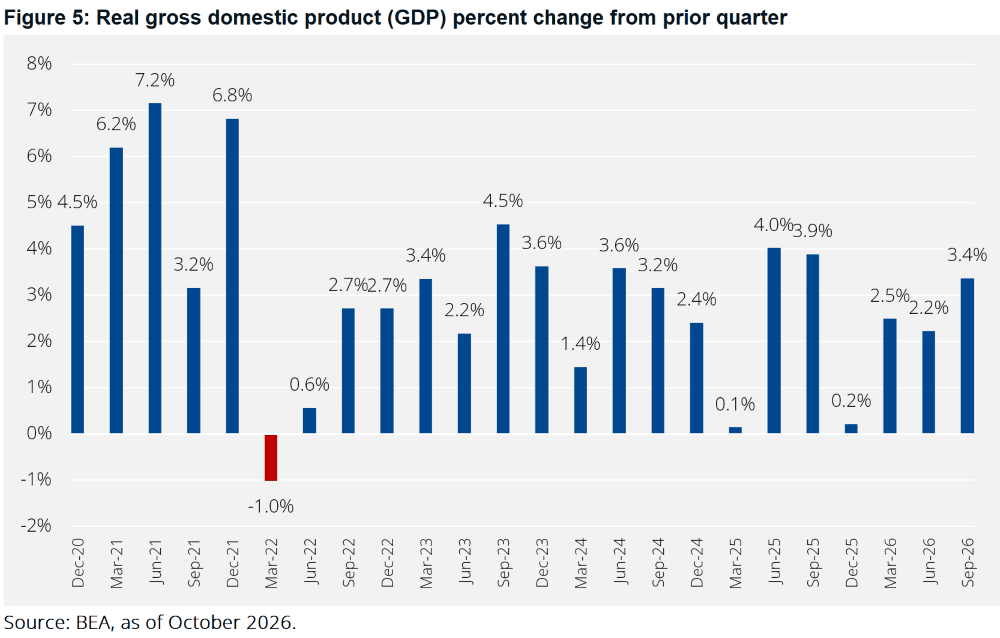
The strength of the economy is particularly encouraging given persistent uncertainty surrounding inflation, monetary policy, and international trade. While elevated borrowing costs continue to weigh on interest-sensitive sectors such as housing, consumer spending and business investment remain resilient. The labor market will be important to monitor for signs of weakening demand, but we do not currently see the conditions necessary for a broad-based recession.
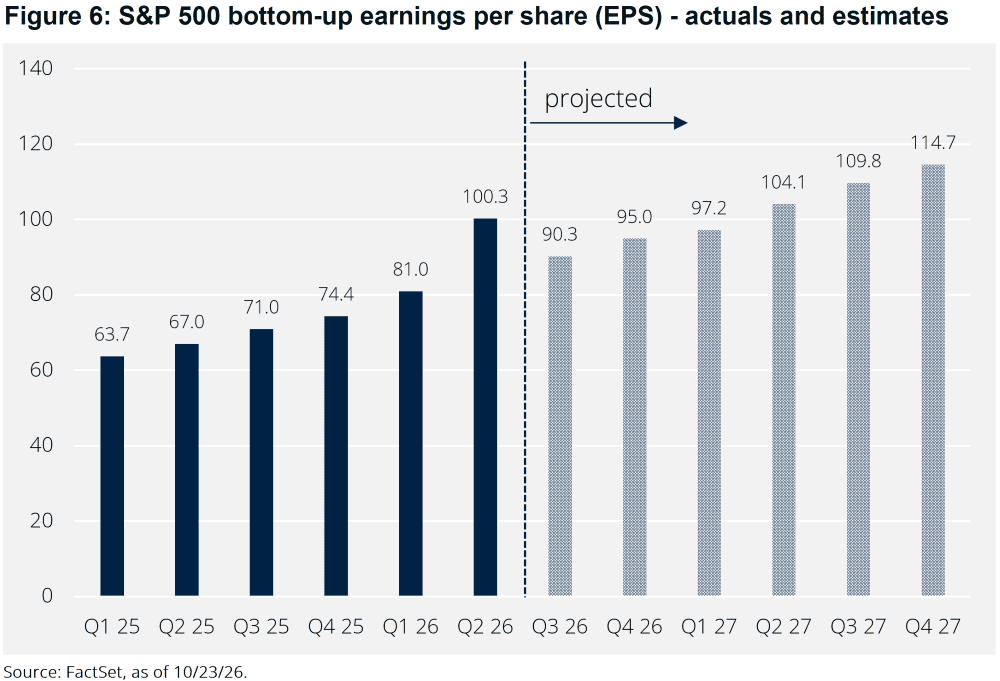
Corporate earnings have been equally important in supporting equity markets. Following exceptionally strong profit growth in 2026, earnings are expected to moderate in 2027, with consensus estimates projecting revenue growth of 9.5% and earnings growth of 16.0%, down from 12.8% and 33.1%, respectively. While this represents a meaningful deceleration, double-digit earnings growth remains a favorable backdrop for equities, particularly as corporate balance sheets and free cash flow generation remain generally healthy. As illustrated in Figure 6, the anticipated slowdown in earnings growth by mid-2027 to some extent reflects a high base effect, as unusually strong earnings in Q2 2026 create a difficult year-over-year comparison.
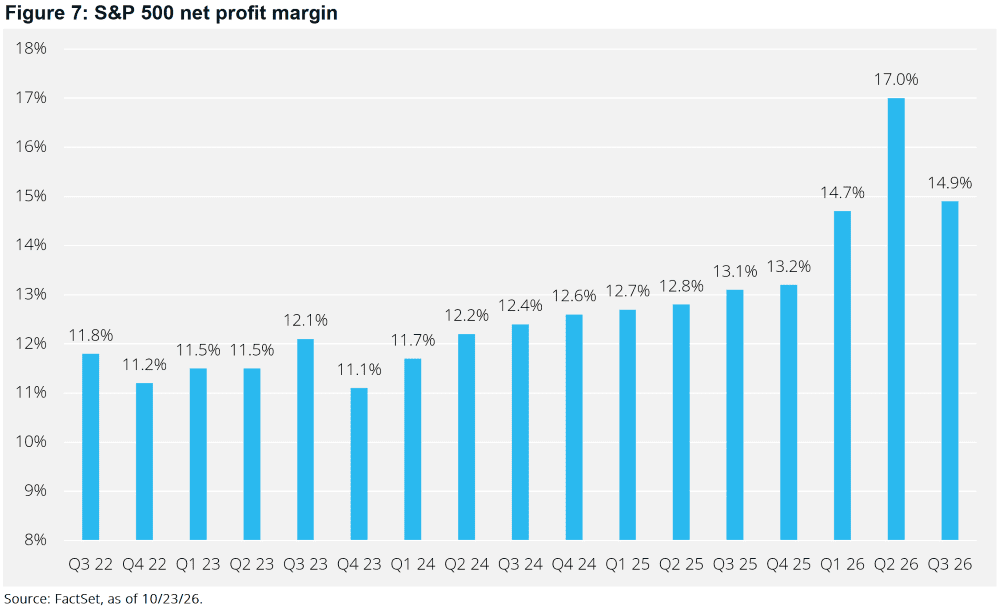
One potential source of continued economic strength is productivity growth. The experience of the 1990s offers an interesting, though imperfect, historical comparison, when advances in computing and communications technology helped sustain economic expansion and corporate profitability. Today, artificial intelligence and automation could provide a similar boost, allowing businesses to produce more with fewer resources while potentially offsetting higher labor and financing costs. Although history is unlikely to repeat itself precisely, sustained productivity improvements could allow the economy to grow faster than traditional models suggest, while potentially lifting the ceiling on corporate profit margins. As shown in Figure 7 below, profit margins have expanded significantly in recent quarters. Looking ahead, the question is whether AI-driven productivity gains can sustain this expansion as the tax benefits of accelerated depreciation begin to fade.
Perhaps the most significant development for investors is the Federal Reserve's potential transition toward a new cycle of monetary tightening. After fifteen years largely characterized by historically low interest rates, interrupted by periods of inflation-driven tightening, a sustained higher-rate environment could have important implications across nearly every asset class.
Current expectations suggest the Fed could raise rates three more times by the end of 2027, potentially bringing the federal funds rate closer to 5% than 4%. While the timing and magnitude remain uncertain, investors may need to adjust to borrowing costs remaining elevated for longer than previously anticipated.
Have we entered a new normal for interest rates?
For much of the past fifteen years, exceptionally low rates supported asset valuations, encouraged borrowing, and reduced corporate financing costs. A sustained shift toward higher rates would place greater scrutiny on capital allocation, increase financing costs for consumers and businesses, and provide investors with more attractive alternatives to equities.
The impact will vary across sectors. Homebuilders, real estate, and companies dependent on external financing face particular challenges, while businesses whose valuations rely heavily on distant future earnings may also come under pressure.
For equities, moderating earnings growth and additional rate increases could become meaningful headwinds in 2027. Strong economic fundamentals have helped markets absorb higher yields thus far, but further tightening could eventually weigh on profitability and investor sentiment. Conversely, improving inflation and easing financial conditions could support further market gains, particularly if corporate earnings remain resilient.
Fixed income presents a different opportunity. As illustrated in Figure 8 below, interest rates on U.S. government bonds have risen significantly across all maturities this year, from short-term Treasury bills to 30-year bonds. Although rising yields have pressured existing bond holdings, they have also improved prospective returns on new investments. Higher starting yields now offer more attractive income and a greater cushion against future volatility.
We are increasingly constructive on fixed income at current yield levels but see little reason to aggressively extend duration while additional tightening remains possible. Patience may create opportunities to establish longer-term positions at even more attractive yields.
Artificial intelligence remains one of the most consequential developments influencing financial markets. Enormous investment in computing infrastructure, data centers, and advanced semiconductors has supported substantial gains across the technology sector. At the same time, concentrated market returns and elevated valuations have raised a familiar question: Are we witnessing another technology bubble?
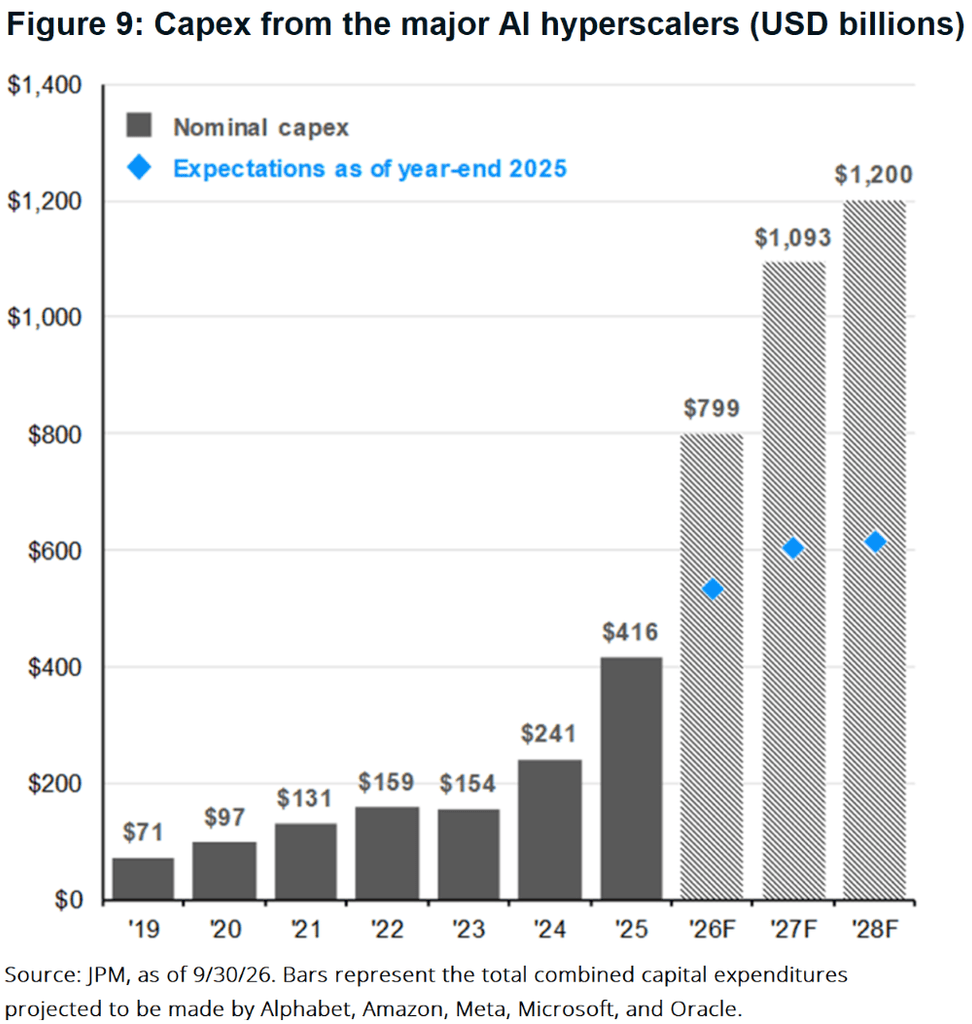
We do not believe so. Unlike previous periods of speculative excess, today's AI investment cycle is being driven largely by established, highly profitable companies generating substantial cash flows. While valuations in certain areas warrant caution, the underlying demand for AI infrastructure is real, and we believe the resulting productivity gains will fundamentally reshape how businesses operate and the broader economy functions.
Technological revolutions rarely unfold without disruption. The Industrial Revolution ultimately transformed global productivity and living standards, but its transition involved significant economic dislocation and unevenly distributed benefits. We expect AI to follow a similarly uneven path, creating extraordinary opportunities while challenging established industries and business models.
This does not mean every AI-related investment will succeed. Some companies will struggle to adapt, while others may fail to generate sufficient returns to justify today's valuations. However, speculative excess in individual companies should not be confused with a broader market bubble or the long-term economic potential of the technology itself.
Thus far, the investment cycle has primarily benefited companies building the infrastructure necessary to develop and operate AI models. Semiconductor manufacturers, data center operators, and related equipment providers have experienced extraordinary demand. As this investment continues, investors will increasingly focus on whether the resulting productivity improvements and revenue opportunities justify the substantial capital expenditures being made today.
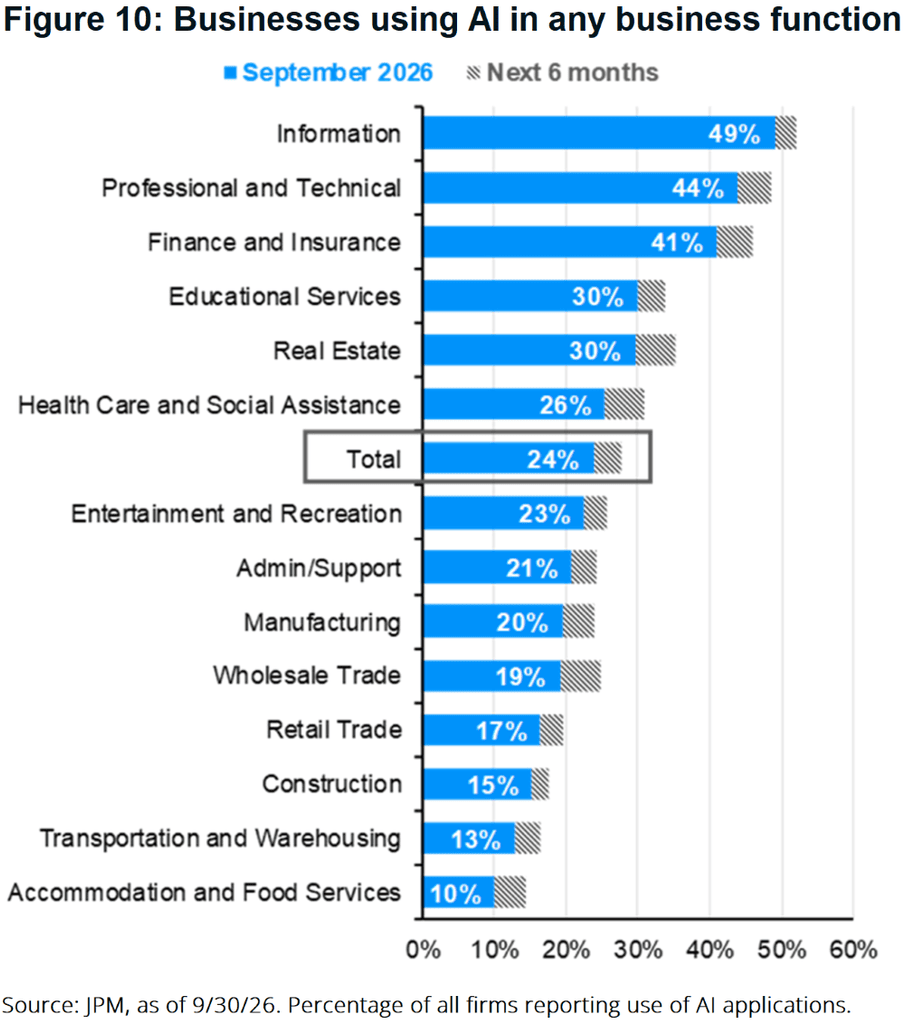
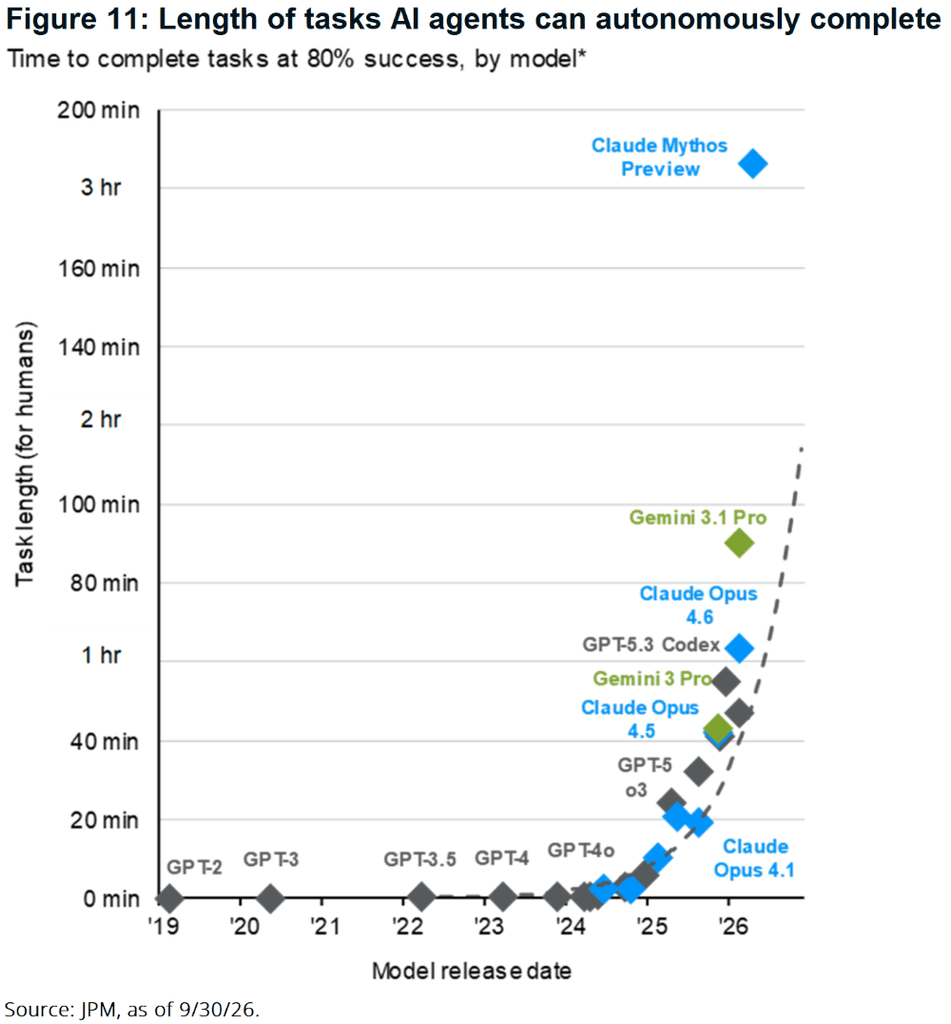
We are particularly interested in the next phase of AI adoption, when the economic benefits extend beyond infrastructure providers. Healthcare offers one compelling example, with AI accelerating drug discovery, improving diagnoses, and reducing development costs. Cybersecurity represents another opportunity, while industrial businesses, financial institutions, and other sectors stand to benefit from improved efficiency, automation, and decision-making. As illustrated in Figures 10 and 11 below, AI adoption remains in its early stages, even as the capabilities of AI agents continue to advance rapidly. Together, these trends suggest substantial opportunities for further productivity gains across the economy.
Ultimately, we believe AI represents a lasting economic transformation rather than a speculative bubble. The path forward will undoubtedly be volatile, and not every company will emerge as a winner. This reinforces the importance of diversification and disciplined investment selection. Rather than attempting to predict every beneficiary, we seek to position portfolios across industries where technological innovation can drive sustainable earnings growth and long-term shareholder value.
The upcoming midterm elections introduce another layer of uncertainty as investors look toward 2027. Changes in congressional control could influence fiscal policy, government spending, trade negotiations, and the administration's ability to advance its legislative agenda.
One immediate consideration is the federal debt ceiling. The administration may seek to address outstanding borrowing authority questions during the lame-duck session, potentially reducing the risk of a contentious negotiation next year. Otherwise, investors could face renewed fiscal uncertainty in 2027.
A more divided government could constrain domestic legislative initiatives while placing greater emphasis on executive authority in areas such as trade and foreign affairs. Relations with major trading partners, including Canada, will remain important given their implications for business investment, supply chains, and inflation.
While political developments can generate market volatility, we caution against making significant portfolio decisions based solely on anticipated election outcomes. Corporate earnings, economic growth, and monetary policy have historically been more durable drivers of long-term investment returns than the composition of Congress.
Our investment outlook remains constructive, supported by resilient economic growth and strong corporate earnings. However, higher interest rates, moderating earnings expectations, and increasingly concentrated market leadership reinforce the importance of diversification and selectivity as we approach 2027.
Within equities, we are selectively adding to technology while maintaining a modest overall underweight to the sector. Our focus extends beyond the companies leading the initial AI investment cycle to businesses with attractive valuations, durable competitive advantages, and strong free cash flow generation. We are also increasing exposure to healthcare, where improving fundamentals and technological innovation present compelling opportunities. Elsewhere, we remain selective within industrials, continue evaluating opportunities in financials, and maintain a cautious outlook on international equities.
Higher yields have improved the income and return potential of fixed income. We are increasingly constructive on the asset class but remain patient about extending duration given the possibility of additional monetary tightening.
Looking ahead, we expect moderating earnings growth, elevated interest rates, and political uncertainty to create a more challenging investment environment in 2027. Nevertheless, the underlying economy remains resilient, corporate balance sheets are generally healthy, and technological innovation offers meaningful opportunities for productivity growth. We believe a disciplined approach, emphasizing diversification, quality businesses at reasonable valuations, and flexibility across asset classes, will position portfolios to navigate these challenges while participating in long-term economic growth.
Thank you for your continued trust and partnership. We sincerely appreciate the opportunity to manage your investments and are always available to discuss your portfolio or answer any questions.
Sincerely,
Leeward Financial Partners


